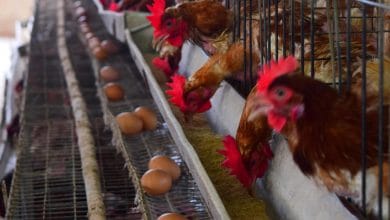

Ivory Coast has reported a new outbreak of highly pathogenic avian influenza, as authorities face renewed pressure on a key agricultural sector after several years of relative stability.
Avian influenza remains one of the most devastating viral diseases affecting birds and poultry farming worldwide. Consequently, the resurgence poses a significant risk for West Africa’s poultry industry, particularly as Ivory Coast seeks to consolidate recent gains.
Authorities confirmed a highly pathogenic outbreak at a poultry farm in Koun-Fao, located in the Gontougo region in the country’s center-east. The World Organisation for Animal Health reported the case on April 16 based on a notification from Ivorian authorities.

According to the report submitted to the organization, the infection killed around 95,000 birds at the farm. Authorities have not identified the origin of the outbreak. The identified strain, H5N1, is known for its high virulence and its ability to cause elevated mortality rates in both commercial and village poultry systems.
A resurgence after five years without major cases
This outbreak follows a period of relative calm. Ivory Coast had not reported a major avian flu outbreak since 2021, when authorities detected cases in Grand-Bassam. That episode triggered an epizootic that led authorities to cull more than 600,000 birds and caused financial losses exceeding CFA3 billion (US$5.37 million).
Earlier, the country had faced multiple waves of the disease, including in 2015. Those outbreaks caused significant sanitary impacts on farms and led to preventive culling of more than 200,000 birds, according to the Food and Agriculture Organization.
Beyond direct losses at the affected farm, the reappearance of the virus in 2026 could generate additional costs. Authorities may incur expenses related to sanitary measures such as disinfection and surveillance. Moreover, restrictions on movement could disrupt local supply chains.
The next developments will determine whether this outbreak remains an isolated case or signals the start of a broader epizootic. Such a scenario could slow growth momentum in the Ivorian poultry sector.
Official statistics show that Ivory Coast has significantly expanded its poultry population over the past decade. The national flock increased from 57.46 million birds to an estimated 149.17 million birds in 2024, highlighting the sector’s rapid growth trajectory.