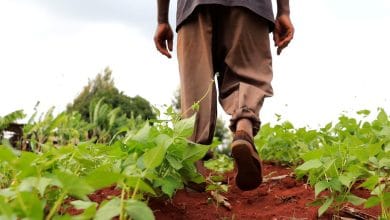

Cameroon’s government plans to increase agricultural production in strategic sectors as part of its Economic and Financial Program presented by the prime minister. For palm oil, authorities aim for an additional 20,500 tons of output in 2026. This push is part of a broader effort to strengthen self-sufficiency and reduce imports.
The plan comes as two loan agreements totaling CFA51.7 billion near completion with Standard Chartered Bank London. The funds will support the construction of a rubber-processing plant and a palm oil plant for the Cameroon Development Corporation (CDC). The investment is expected to boost national industrial capacity and improve value creation from farming to processing.
A structural deficit that drives imports
Early 2025 figures show renewed momentum. National production of crude palm oil reached 77,630 tons in the first quarter, almost three times the output of the previous quarter due to the peak of the main agricultural season. Despite this sequential rise, the sector still falls short of domestic needs. Year on year, the quarterly volume is down 10.6%, and authorities expect about a 2% drop for full-year 2025.

In 2024, Cameroon produced 446,984 tons of crude palm oil, according to Prime Minister Joseph Dion Ngute. This volume remains well below domestic demand. The ASROC estimates the structural deficit at more than 500,000 tons a year. This chronic shortfall results in heavy reliance on imports. Between 2017 and 2023, the country imported 409,000 tons of palm oil at a cumulative cost of CFA280.4 billion, according to the national statistics institute.
The additional output targeted for 2026 will depend on investment and coordination across the entire value chain, from plantations, yields, and producer support to processing capacity, logistics, and distribution. Without these improvements, the structural deficit and dependence on imports will continue to weigh on public finances, the trade balance, and the competitiveness of local industry.