
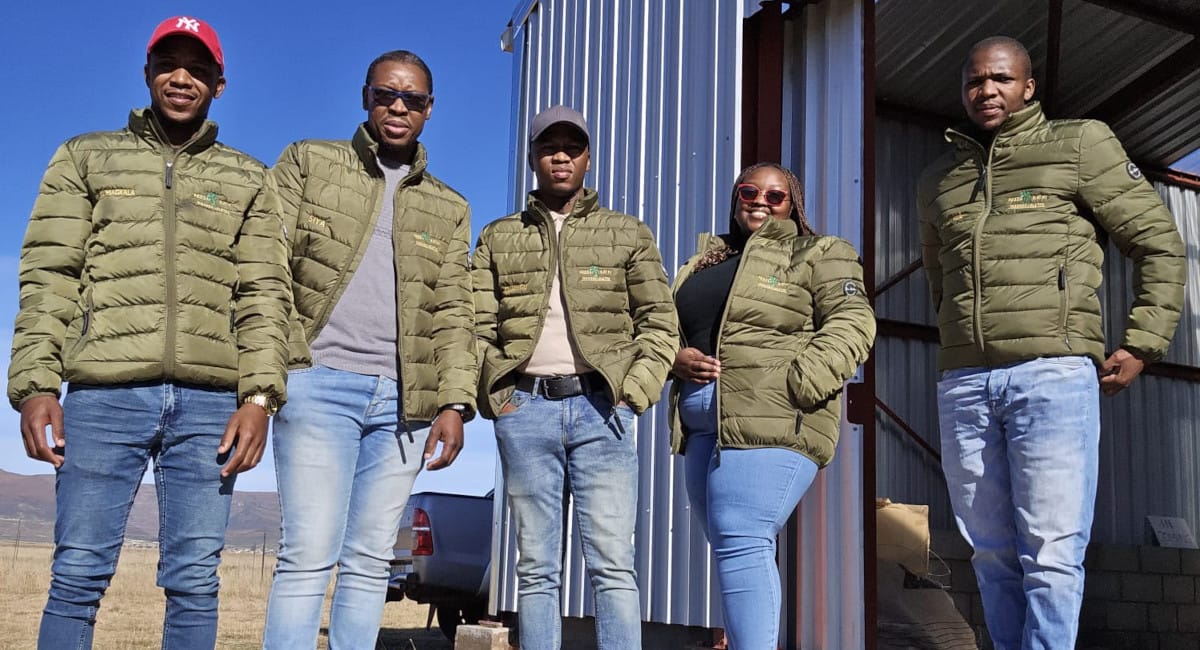
A R399,796 incentive from the Eastern Cape Development Corporation (ECDC) – managed Imvaba Cooperative Fund to implement an irrigation scheme is fuelling the commercialisation ambitions of the youth-owned Feeda Nathi Primary Agricultural Cooperative in Vaalbank, Lady Frere.
Operating on a 50-hectare farm, the team currently uses approximately six hectares, producing cabbage, butternut, beetroot, large white pumpkins and green squash. Today, Feeda Nathi supplies established markets including Pick n Pay in Komani, SPAR Dordrecht, Umfundisi in Queenstown, and the East London Fresh Produce Market. Although they formalised their business in 2020, today the cooperative is a far cry from 2018, when they started where many agricultural journeys begin, in backyard gardens.
Owned by five youth farmers, aged between 26 and 33, Siyamthanda Gatyeni, Lumanyano Magxala, Sandiso Magxala, Zimi Gatyeni and Thabiso Magxala, they have built more than a farming operation. They have created jobs and economic activity in their rural community, employing 12 permanent workers and 18 seasonal workers.

“When jobs disappeared and uncertainty arrived in the midst of the COVID-19 pandemic in 2020, they did not wait for opportunity to knock. They planted it. Six years later, the cooperative has become an example of what happens when determination meets opportunity.
“The R399,796 investment for the procurement of an irrigation scheme unlocked more than water. It strengthened production capacity and allowed the cooperative to move from survival farming toward commercial ambition,” says ECDC Acting Manager for Financial Incentives and Business Support, Fikile Mzinyati.
Feeda Nathi Chairperson Siyamthanda Gatyeni says one of the turning points in their growth journey came through the implementation of the irrigation system.
Gatyeni says for a farming business operating in an environment where rainfall can no longer be relied upon, irrigation changed everything.
“That support made a huge difference. Irrigation is one of the most important things when growing crops. Before that, we depended heavily on rainfall and it cost us a lot. Now we can water our crops with certainty and consistency”, says Gatyeni.
The cooperative has also achieved South African Good Agricultural Practices (SA-GAP) certification, positioning the business to meet formal market standards and compete at a larger scale. Still, the team believes this is only the beginning.
Their next growth phase includes expanding irrigation infrastructure, acquiring a larger tractor, investing in bigger planting implements and securing a fine-seed planter to improve efficiency and scale production. They also identify cold storage and alternative energy solutions, whether solar or backup generation, as critical investments that would help protect produce and strengthen market competitiveness.
“There is a myth that young people are not interested in agriculture. Yet in Vaalbank we are proving something different, that youth and agriculture may just be one of the boldest business combinations in the Eastern Cape.
“Our long-term vision is clear, to operate sustainably at commercial scale, and supply markets across towns surrounding Vaalbank and beyond. We have also added a logistics arm to our business where we transport iron ore,” Gatyeni adds.
Mzinyati says investing in youth-owned agricultural businesses is an investment in a more inclusive, resilient and prosperous future.
“It helps preserve agricultural knowledge and experience through sustainable enterprises while strengthening the long-term growth of the sector. At the same time, it creates opportunities for skills transfer, enabling young people to develop the expertise needed to build, sustain and expand agricultural value chains for generations to come,” says Mzinyati.