

Nigeria’s school feeding initiatives supports nutrition and livelihoods
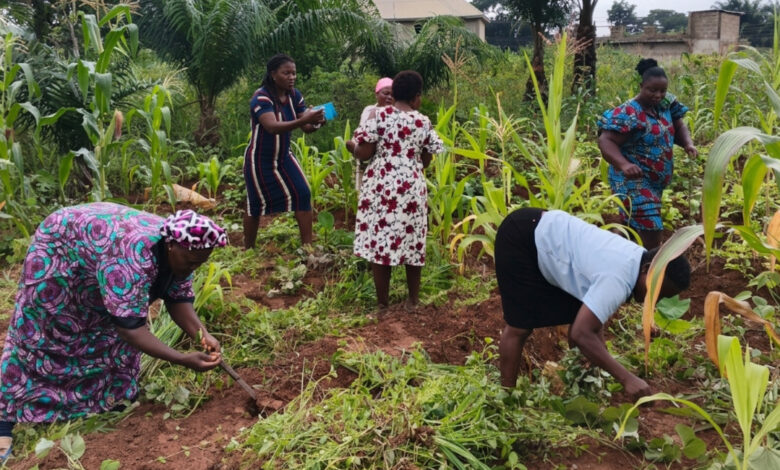
In Kebbi State, northwestern Nigeria, schools are sourcing fortified rice from local millers. In Ibadan, children are growing vegetables and inspiring their families to start gardens at home. And in Enugu State, women school cooks are learning to farm, raise poultry and earn additional income.
These initiatives demonstrate how school feeding can do more than provide children with a daily meal. By connecting schools with local producers and households, they can help improve nutrition, create livelihood opportunities and strengthen local food systems.
The examples were shared at the first Nigeria Community of Policy and Practice (CoPP) webinar, Pathways Towards Transforming School Food Systems. The event brought together government representatives, researchers and practitioners to discuss how evidence from school food initiatives can inform policy and implementation.

The discussions come as Nigeria seeks to expand school feeding coverage from 33% in 2022–2023 to 60% by 2035, under its revised National Policy on Food and Nutrition 2026–2035.
Connecting local suppliers with school meals
“Availability of nutritious food does not necessarily guarantee access to it for poor and vulnerable households,” explained David Atamewalen, Senior Programme Manager at the Global Alliance for Improved Nutrition (GAIN).
In Kebbi State, GAIN has worked with the state government and the World Food Programme to address a practical challenge: although local millers could supply fortified rice, schools lacked reliable arrangements to purchase and collect it.
The project established collection points where school heads can purchase fortified rice from local suppliers. Advocacy through a state advisory committee also helped secure timely funding for bulk purchases.
According to David, 69,700 students across 207 schools now consume fortified rice enriched with B vitamins and zinc, exceeding the initial target of 60,000 children. More than 9,600 kg has been procured from local suppliers.
The experience shows how better procurement and financing arrangements can connect local food production with children’s nutritional needs. Such connections can also create opportunities for the people producing and preparing school meals, particularly women.
Creating livelihood opportunities for women
In Niger, Osun and Enugu states, Action Health Incorporated and the Partnership for Child Development are supporting women school cooks through the Catalysing Change for Healthy Food Systems (CCHeFS) project.
Adesanmi Abimbola, Project Investigator, explained that school feeding has the potential to strengthen local economies and women’s livelihoods by connecting producers, schools and households.
Some 450 women have received training in crop and livestock production, nutrition and financial literacy, helping them grow food and develop income-generating activities.
In Enugu, the initiative has supported school-feeding cooperatives involving around 150 cooks, providing access to community land, biofortified crops, poultry and agricultural training.
Ifeanyi Onah, Enugu State’s School Feeding Programme Manager, explained that some women had never farmed before joining the initiative. They now use their harvests to feed their families and earn income from sales, reducing household expenses. Working together within a cooperative has also strengthened their confidence and involvement in family decisions.
However, challenges with the financing and implementation of school feeding in Enugu have disrupted programme delivery, limiting opportunities for women to apply their new skills in preparing school meals. Their experience demonstrates how the wider livelihood benefits of school feeding depend on consistent programme delivery.
While these initiatives connect schools with local production and livelihoods, another approach is exploring how school-based learning can influence food choices at home.
Taking nutrition lessons home
At the University of Ibadan, researchers have spent nearly a decade exploring a simple question: how can children be encouraged to eat more vegetables?
Through Nutri-Garden activities, children grow, harvest, prepare and eat traditional leafy vegetables, including ewedu (jute mallow) and tete (amaranth), before taking recipes and learning activities home.
Shirley Isi Ejoh, Senior Lecturer in Human Nutrition and Dietetics, described how school gardens had become classrooms and nutrition laboratories, allowing children to experience the journey of food from soil to plate.
Among parents providing feedback, more than 70% reported starting a garden because of their child’s participation, while over 90% had prepared a recipe taught through the programme.
Although children’s nutrition knowledge increased, measured changes in vegetable consumption were not statistically significant, suggesting that repeated learning and family engagement are needed to encourage lasting dietary changes.
The initiative has evolved into Nutri-Garden clubs operating throughout the academic year. More than 150 student volunteers have been trained, while schools with limited space have adapted the approach by growing vegetables in containers and sacks.
“Starting a garden is easier than sustaining one,” Shirley reflected, stressing the importance of embedding gardening into school routines and securing long-term support.
Building stronger school food systems
Together, the experiences from Kebbi, Enugu and Ibadan demonstrate how school feeding can support children’s nutrition while creating opportunities for local producers, women and households.
Yet they also reveal common challenges: securing reliable financing, maintaining programme continuity and ensuring that promising initiatives have the institutional support needed to succeed.
Clementina Ebere Okoro, Director of Food and Nutrition at Nigeria’s Federal Ministry of Budget and Economic Planning, emphasised that school feeding can be a catalyst for wider food systems transformation.
Through the Nigeria CoPP, researchers, policymakers and practitioners are bringing these lessons together to strengthen school food policy and implementation – helping ensure that the benefits extend beyond the classroom and into communities.